Achmed the Dead Terrorist



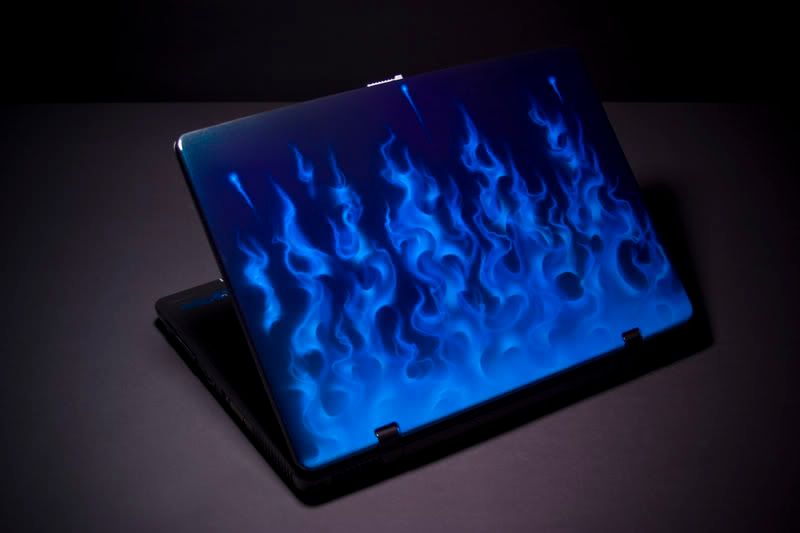
Apple MacBook Pro






This Topic was Stolen from: The Top Socialite
 10: Emma Thompson
 9: Rashida Jones
 8: Alicia Keys
 7: Jennifer Beals
 6: Kate Beckinsale
 5: Sharon Stone
 4. Jodie Foster
 3. Jennifer Connelly
 2. Natalie Portman
 1. Elizabeth Shue
"My forecast is that around 2050, the state of Massachusetts will be the first jurisdiction to legalize marriages with robot" artificial intelligence researcher David Levy at the University of Maastricht in the Netherlands told LiveScience. Levy recently completed his Ph.D. work on the subject of human-robot relationships, covering many of the privileges and practices that generally come with marriage as well as outside of it.
At first, sex with robots might be considered geeky, "but once you have a story like 'I had sex with a robot, and it was great!' appear someplace like Cosmo magazine, I'd expect many people to jump on the bandwagon," Levy said.
Pygmalion to Roomba
The idea of romance between humanity and our artistic and/or mechanical creations dates back to ancient times, with the Greek myth of the sculptor Pygmalion falling in love with the ivory statue he made named Galatea, to which the goddess Venus eventually granted life.
This notion persists in modern times. Not only has science fiction explored this idea, but 40 years ago, scientists noticed that students at times became unusually attracted to ELIZA, a computer program designed to ask questions and mimic a psychotherapist.
"There's a trend of robots becoming more human-like in appearance and coming more in contact with humans," Levy said. "At first robots were used impersonally, in factories where they helped build automobiles, for instance. Then they were used in offices to deliver mail, or to show visitors around museums, or in homes as vacuum cleaners, such as with the Roomba. Now you have robot toys, like Sony's Aibo robot dog, or Tickle Me Elmos, or digital pets like Tamagotchis."
In his thesis, "Intimate Relationships with Artificial Partners," Levy conjectures that robots will become so human-like in appearance, function and personality that many people will fall in love with them, have sex with them and even marry them.
"It may sound a little weird, but it isn't," Levy said. "Love and sex with robots are inevitable."
Sex in 5 years
Levy argues that psychologists have identified roughly a dozen basic reasons why people fall in love, "and almost all of them could apply to human-robot relationships. For instance, one thing that prompts people to fall in love are similarities in personality and knowledge, and all of this is programmable. Another reason people are more likely to fall in love is if they know the other person likes them, and that's programmable too."
In 2006, Henrik Christensen, founder of the European Robotics Research Network, predicted that people will be having sex with robots within five years, and Levy thinks that's quite likely. There are companies that already sell realistic sex dolls, "and it's just a matter of adding some electronics to them to add some vibration," he said, or endowing the robots with a few audio responses. "That's fairly primitive in terms of robotics, but the technology is already there."
As software becomes more advanced and the relationship between humans and robots becomes more personal, marriage could result. "One hundred years ago, interracial marriage and same-sex marriages were illegal in the United States. Interracial marriage has been legal now for 50 years, and same-sex marriage is legal in some parts of the states," Levy said. "There has been this trend in marriage where each partner gets to make their own choice of who they want to be with."
"The question is not if this will happen, but when," Levy said. "I am convinced the answer is much earlier than you think."
When and where it'll happen
Levy predicts Massachusetts will be the first jurisdiction to legalize human-robot marriage. "Massachusetts is more liberal than most other jurisdictions in the United States and has been at the forefront of same-sex marriage," Levy said. "There's also a lot of high-tech research there at places like MIT."
Although roboticist Ronald Arkin at the Georgia Institute of Technology in Atlanta does not think human-robot marriages will be legal anywhere by 2050, "anything's possible. And just because it's not legal doesn't mean people won't try it," he told LiveScience.
"Humans are very unusual creatures," Arkin said. "If you ask me if every human will want to marry a robot, my answer is probably not. But will there be a subset of people? There are people ready right now to marry sex toys."
The main benefit of human-robot marriage could be to make people who otherwise could not get married happier, "people who find it hard to form relationships, because they are extremely shy, or have psychological problems, or are just plain ugly or have unpleasant personalities," Levy said. "Of course, such people who completely give up the idea of forming relationships with other people are going to be few and far between, but they will be out there."
Ethical questions
The possibility of sex with robots could prove a mixed bag for humanity. For instance, robot sex could provide an outlet for criminal sexual urges. "If you have pedophiles and you let them use a robotic child, will that reduce the incidence of them abusing real children, or will it increase it?" Arkin asked. "I don't think anyone has the answers for that yet—that's where future research needs to be done."
Keeping a robot for sex could reduce human prostitution and the problems that come with it. However, "in a marriage or other relationship, one partner could be jealous or consider it infidelity if the other used a robot," Levy said. "But who knows, maybe some other relationships could welcome a robot. Instead of a woman saying, 'Darling, not tonight, I have a headache,' you could get 'Darling, I have a headache, why not use your robot?'"
Arkin noted that "if we allow robots to become a part of everyday life and bond with them, we'll have to ask questions about what's going to happen to our social fabric. How will they change humanity and civilization? I don't have any answers, but I think it's something we need to study. There's a real potential for intimacy here, where humans become psychologically and emotionally attached to these devices in ways we wouldn't to a vibrator."
Levy is currently writing a paper on the ethical treatment of robots. When it comes to sex and love with robots, "the ethical issues on how to treat them are something we'll have to consider very seriously, and they're very complicated issues," Levy said.


This Topic was Stolen from: cnn.com
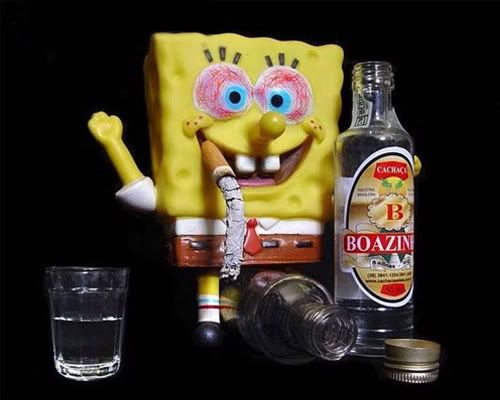
Think you can drink like a sailor? Maybe you should take a moment to reflect on what that truly means.
The record for history's largest cocktail belongs to British Lord Admiral Edward Russell. In 1694, he threw an officer's party that employed a garden's fountain as the punch bowl.
The concoction? A mixture that included 250 gallons of brandy, 125 gallons of Malaga wine, 1,400 pounds of sugar, 2,500 lemons, 20 gallons of lime juice, and 5 pounds of nutmeg.
A series of bartenders actually paddled around in a small wooden canoe, filling up guests' cups. Not only that, but they had to work in 15-minute shifts to avoid being overcome by the fumes and falling overboard.
The party continued nonstop for a full week, pausing only briefly during rainstorms to erect a silk canopy over the punch to keep it from getting watered down. In fact, the festivities didn't end until the fountain had been drunk completely dry.
The Industrial Revolution wasn't all steam engines and textile mills. Beer production increased exponentially, as well. Fortunately, the good people of England were up to the challenge and drained kegs as fast as they were made. Brewery owners became known as "beer barons," and they spent their newfound wealth in an age-old manner -- by trying to party more than the next guy.
Case in point: In 1814, Meux's Horse Shoe Brewery in London constructed a brewing vat that was 22 feet tall and 60 feet in diameter, with an interior big enough to seat 200 for dinner -- which is exactly how its completion was celebrated. (Why 200? Because a rival had built a vat that seated 100, of course.)
After the dinner, the vat was filled to its 4,000-barrel capacity. Pretty impressive, given the grand scale of the project, but pretty unfortunate given that they overlooked a faulty supporting hoop. Yup, the vat ruptured, causing other vats to break, and the resulting commotion was heard up to 5 miles away.
A wall of 1.3 million gallons of dark beer washed down the street, caving in two buildings and killing nine people by means of "drowning, injury, poisoning by the porter fumes, or drunkenness."
The story gets even more unbelievable, though. Rescue attempts were blocked and delayed by the thousands who flocked to the area to drink directly off the road. And when survivors were finally brought to the hospital, the other patients became convinced from the smell that the hospital was serving beer to every ward except theirs. A riot broke out, and even more people were left injured.
Sadly, this incident was not deemed tragic enough at the time to merit an annual memorial service and/or reenactment.
3. New York state of mind: The Dutch ingratiate themselves to the natives
In 1609, the Dutch sent English explorer Henry Hudson westward for a third attempt at finding the fabled Northeast Passage. A near mutiny forced him southward, and upon reaching land, he encountered members of the Delaware Indian tribe.
To foster good relations, Hudson shared his brandy with the tribal chief, who soon passed out. But upon waking up the next day, he asked Hudson to pour some more for the rest of his tribe. From then on, the Indians referred to the island as Manahachtanienk -- literally, "The High Island."
And not "high" as in "tall;" high as in "the place where we got blotto." Most people would agree that Manhattan has stayed true to the spirit of its name ever since.
4. The worst aftertaste in history
In 1805, British Admiral Horatio Nelson was killed during the Battle of Trafalgar off the coast of Spain. Most sailors were simply put to rest at sea, but as an admiral, Nelson had to be brought back to England for an official burial.
To preserve his body during the voyage home, the second-in-command stored Nelson's body in the ship's vat of rum and halted all liquor rations to the crew. Not a bad idea, but when the ship reached port, officials went to retrieve Nelson's body and found the vat dry.
Disregarding good taste (in every sense), the crew had been secretly drinking from it the entire way home. After that, naval rum was referred to as Nelson's Blood.
5. Indian elephants raid the liquor cabinet
No wonder they don't sell beer at the circus. Apparently, elephants like to get wasted. In fact, an outpost of the Indian army in the jungle region of Bagdogra has been under attack ever since a local herd of elephants raided the base in search of food and discovered the soldiers' entire winter rations of rum.
Since then, the pachyderms have regularly raided the base for a drink and have smashed down all defenses put up by the army, including electrified fences and firewalls.
According to The Daily Telegraph, "An officer recently posted there explained that the elephants broke the rum bottles by cleverly curling their trunks around the bottom. Then they empty the contents down their throats. They soon got drunk, he said, and swayed around. They enjoy themselves and then return to the jungle."
This Topic was Stolen From: netchick.ca
(Counter-clockwise) LEFT BRAIN FUNCTIONS
uses logic
detail oriented
facts rule
words and language
present and past
math and science
can comprehend
knowing
acknowledges
order/pattern perception
knows object name
reality based
forms strategies
practical
safe
(Clockwise) RIGHT BRAIN FUNCTIONS
uses feeling
“big picture” oriented
imagination rules
symbols and images
present and future
philosophy & religion
can “get it” (i.e. meaning)
believes
appreciates
spatial perception
knows object function
fantasy based
presents possibilities
impetuous
risk taking